Los mejores detectores de humo y monóxido de carbono de 2025


Los evaluadores de CR afirman que estos modelos de First Alert, Kidde, Siterwell y Universal Instruments son excelentes para protegerte a ti y a tus seres queridos.
Un buen detector debería responder ante las llamas, el humo y los niveles altos y bajos de CO.
By Courtney Lindwall
Instalar detectores de humo y monóxido de carbono confiables en tu hogar puede marcar la diferencia entre la vida y la muerte.
Aproximadamente el 60 % de las muertes por incendios ocurren en hogares sin alarmas de humo que funcionen, según la Asociación Nacional de Protección contra Incendios. Además, más de 400 estadounidenses mueren cada año por intoxicación accidental con CO, según los Centros para el Control y la Prevención de Enfermedades. Sin embargo, aunque la mayoría de los detectores son similares y cuentan con la certificación de una organización de pruebas, como Underwriters Laboratory (UL) o Intertek Electrical Testing Labs (ETL), no todos responden con la misma rapidez y eficiencia.
Por este motivo probamos docenas de modelos. En nuestro laboratorio, exponemos los detectores a niveles bajos de CO (100 partes por millón) y altos (400 ppm) para comprobar la rapidez y precisión con la que detectan este gas incoloro e inodoro. En los modelos que muestran o anuncian niveles específicos de CO, comprobamos la precisión de esas lecturas.
Es similar a cómo probamos los detectores de humo, los cuales exponemos a llamas y a fuegos latentes con humo para comprobar su eficacia en ambos casos.
En general, los detectores funcionan con pilas, con cable o enchufados a una toma de corriente. Para determinar el tipo de detector que necesitas, desmonta los detectores de tu casa.
Los detectores con cable requieren un cableado especial para su alimentación que generalmente sólo se encuentra en casas nuevas o remodeladas. Sabrás que tienes detectores cableados si hay cables conectados a estos que van a la pared o al techo.
Los detectores con pilas son inalámbricos y pueden colocarse en cualquier lugar. Suelen funcionar con pilas reemplazables (normalmente de 9 voltios o AA) o pilas de litio selladas que duran 10 años.
Los detectores enchufables reciben un flujo constante de energía de una toma de corriente. Tanto los detectores cableados como los enchufables usan una batería de reserva que tomará el relevo en caso de apagón. Las baterías de reserva deben reemplazarse anualmente.
Los modelos más nuevos ofrecen otras funciones útiles, como alertas de hogar inteligente a través de una aplicación móvil o la capacidad de funcionar en conjunto con otros detectores para que, cuando uno se active, todos lo hagan.
Para ver todos los modelos que hemos probado, visita nuestras calificaciones de detectores de humo y monóxido de carbono (disponibles para todos, de forma gratuita). Para obtener más ayuda sobre cómo elegir cuál es el modelo ideal para ti, consulta también nuestra guía de compra. A continuación, podrás encontrar los mejores detectores de humo y monóxido de carbono, según las necesidades de tu hogar.
Los mejores detectores combinados de humo y monóxido de carbono
Kidde Smart P4010DCSCO-W (Battery)
The Kidde Smart P4010DCSCO-W combination smoke and CO detector earns high scores in CR’s flaming and smoldering fire tests. It relies on a photoelectric sensor, which is typically better at detecting smoldering fires, and runs on a 10-year lithium battery. The model offers a voice alarm and can interconnect with detectors across your home, two helpful features if you’re not near the source of the CO leak.
Siterwell GS886W (Battery)
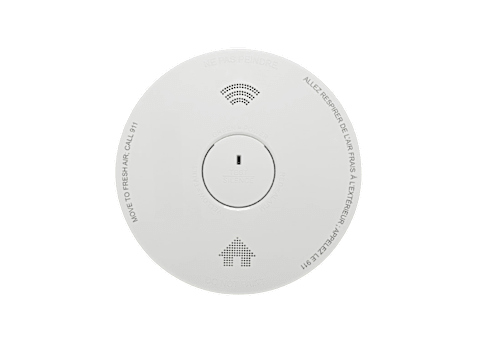
The Siterwell GS886W combination detector runs on AA batteries and receives top-level marks across the board, in our smoldering and flaming fire tests and in our tests for high and low CO levels. It has an optical sensor that combines multiple sensor types to improve accuracy and reduce the frequency of false alarms from cooking. The model can also interconnect with compatible alarms around your home.
Los mejores detectores de humo cableados
Kidde 20SA10
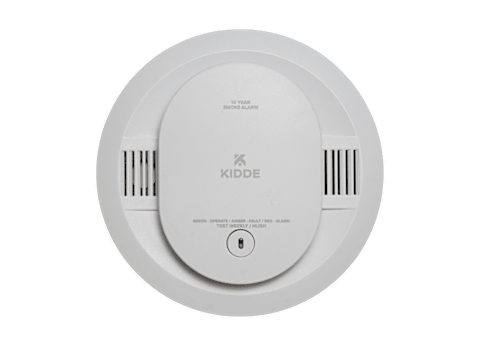
The Kidde 20SA10 responds quickly to both flaming and smoldering fires in our tests. It’s hardwired, but also comes with a 10-year lithium battery backup in case of outages. This detector has a hush button, which is useful in the event of nuisance alarms from cooking, and is interconnectable with other compatible detectors throughout your home, so that when one alarm goes off, they all do.
Universal Security Instruments MI106S
The Universal Security Instruments MI106S smoke detector responds very quickly to both smoldering and flaming fires and comes with a hush button to silence nuisance alarms. It’s also interconnectable with other compatible smoke detectors across your home. A hardwired model with a sealed battery backup, the MI106S may work only in newer or remodeled homes.
Los mejores detectores de humo con pilas
Kidde 20SD10-V
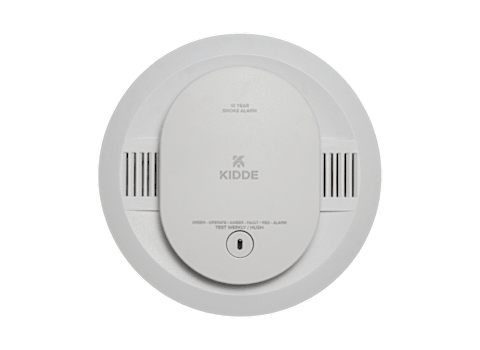
The wireless Kidde 20SD10-V smoke detector passes CR’s flaming and smoldering fire tests with high ratings. It’s powered by a 10-year lithium battery and, like other high-ranking models, features a hush button to quickly quiet false alarms. When smoke or fire is detected, the model flashes red LED lights and emits an 85-decibel alarm as well as voice alerts. (The similar Kidde 20SD10 is also highly rated, but doesn’t offer voice alerts.) This model can’t communicate with other smoke detectors installed across your home.
First Alert SMI100
The First Alert SMI100 quickly detects both flaming and smoldering fires in our labs. This wireless model runs on a replaceable 9-volt battery. It also has a hush button, which is handy in the event of false alarms while cooking, but this detector doesn’t offer interconnectivity with other detectors in your home or with smart-home devices.
Los mejores detectores de monóxido de carbono
First Alert CO615
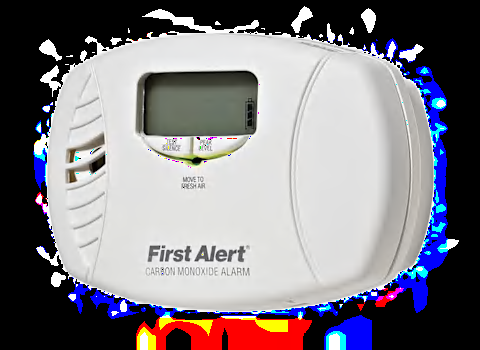
One of the few plug-in CO detectors in our ratings, the First Alert CO615 beats out its hardwired brethren, with strong scores for quickly detecting high and low CO levels, as well as a respectable score for the accuracy of its CO-level display. The model features a battery backup and peak memory, so you can check to see whether CO levels spiked when you were away from home for an extended period of time. It’s a stand-alone device, though, which means it can’t interconnect with other CO detectors.
Kidde C3010-D
If you need a battery-powered CO detector, the Kidde C3010-D excels at detecting high and low CO levels and earns praise from our testers for the accuracy of its CO readings. Its digital display, which shows you the current CO level, updates every 15 seconds. In addition, a peak memory feature logs the highest CO reading, so you can see whether there was a problem while you were away from home. When the alarm detects high CO levels, an 85-decibel siren goes off. The model uses a sealed 10-year lithium battery.
Consumer Reports is an independent, nonprofit organization that works side by side with consumers to create a fairer, safer, and healthier world. CR does not endorse products or services, and does not accept advertising. Copyright © 2025, Consumer Reports, Inc.


